The short answer Buying a bowling alley means buying a special-purpose building and, usually, an operating business with it. Before you buy, check the lanes, pinsetters and scoring, the building's roof and mechanical systems, the liquor license, and the seller's revenue from bowling, leagues, parties, food and drinks. Many owner-operators finance the purchase with an SBA 504 or 7(a) loan, with terms that vary by lender.
What makes a bowling alley different to buy?
A bowling center is built around one use: long, wide, column-free space for the lanes, machinery behind the pins, and a front area for the counter, bar, food and seating. That makes it a special-purpose property. Fewer buyers can use the building as is, a large share of the value sits in specialized equipment, and the property's value depends heavily on how the business performs.
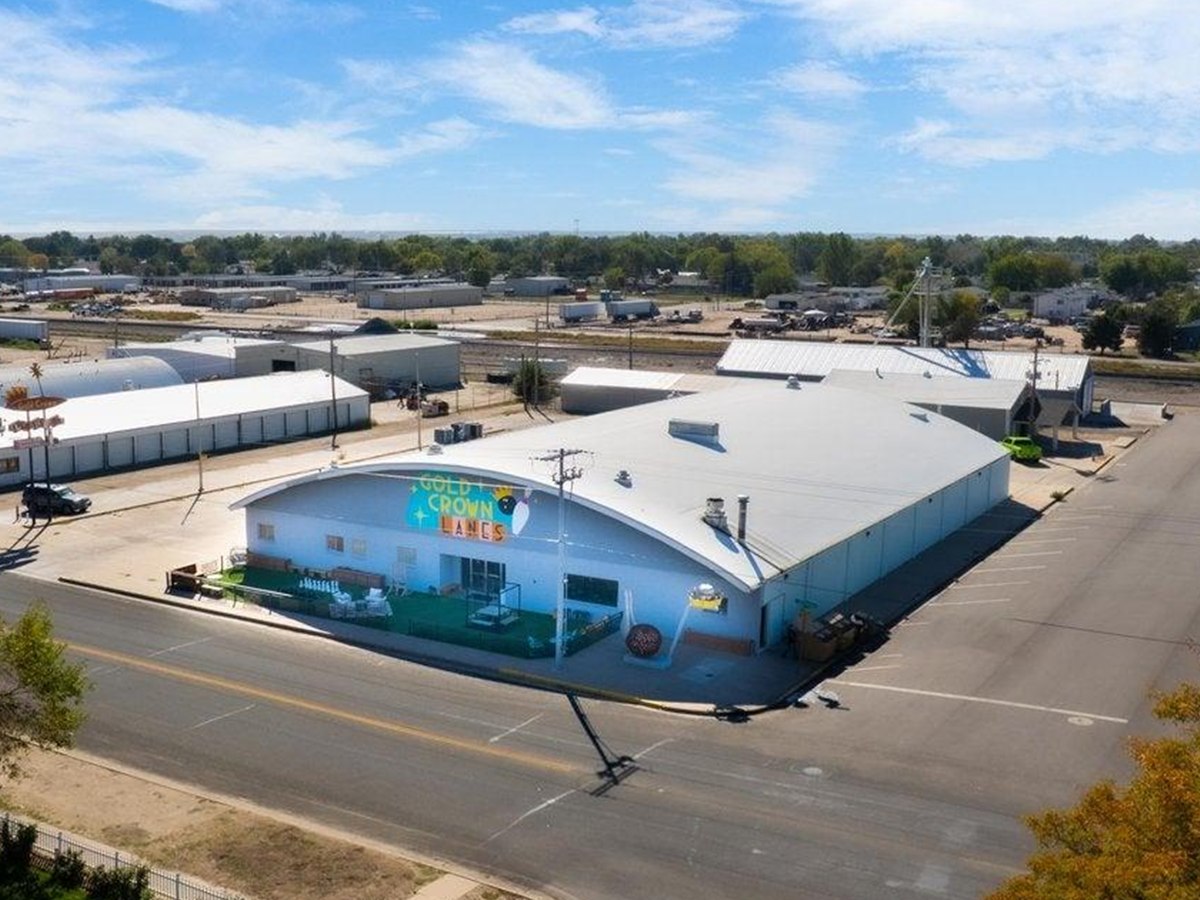
Goff CRE Group, brokered by Nassar Realty, is currently representing the buyer of a bowling alley in Fort Morgan (details below). This page covers the questions that come up on a deal like that.
What should you check on the lanes and equipment?
- Pinsetter type and condition. Traditional free-fall pinsetters release loose pins and reset them mechanically. String pinsetters keep each pin attached to a string that resets it. The United States Bowling Congress certifies string pin bowling as its own category, separate from free-fall. If leagues and tournaments matter to your plan, confirm what the equipment supports. Ask for age, model, service records and parts availability, and have a qualified technician inspect the machines.
- Lane surfaces. Lanes may be wood or synthetic, and each wears and is maintained differently. Ask when the lanes were last resurfaced or replaced and what is under the surface.
- Scoring and front-desk systems. Age, software support, and whether any licenses or service contracts transfer to you.
- Ball returns, masking units and lane machines. Smaller items that add up if several need work at once.
What about the building itself?
Large, low buildings put heavy demands on the roof and HVAC. Have a commercial inspector and a roofer look at roof age and drainage, heating and cooling capacity for the size of the room, electrical service, plumbing, fire protection and any kitchen hood. Count parking and compare it to how busy the center gets on league nights and weekends. Check zoning and whether the current use is legally established, especially if you plan to expand the bar, add arcade space or change the layout.
Does the liquor license transfer?
Not automatically. Colorado is a dual licensing state: retail liquor licenses require approval from the local licensing authority (the city or county) and the state Liquor and Tobacco Enforcement Division, part of the Colorado Department of Revenue. A new owner applies for a transfer of ownership, and local approval comes first. Ask the local clerk about timing early, write the license approval into your contract timeline, and have your attorney review the process. Food service also needs its own license: Colorado retail food licenses are non-transferable, so a new owner applies for a new one.
Where does the revenue come from?
Open bowling is only part of the picture. Ask the seller to break revenue out by source: lane fees, leagues, birthday and corporate parties, food, bar, arcade and pro shop. Food and drinks are often a large share, and a center that depends heavily on leagues has different risks from one built on parties and walk-in traffic. Verify the numbers against tax returns and sales tax filings, not only the seller's summary.
Real estate value vs. business value
The asking price usually bundles three things: land and building, equipment, and the going business. An appraisal supports the real estate. The equipment is worth what its age and condition support. The rest has to be justified by verified cash flow. If the price is far above what the building appraises for, that gap is what you are paying for the business, and your lender will look at it closely.
Can you finance a bowling alley with an SBA loan?
Often, if you will operate it. A bowling alley is generally treated as special-purpose, so an SBA 504 typically needs about 15 percent down (20 percent if the business is also a startup). An SBA 7(a) can combine the real estate, the business acquisition and equipment in one loan. Programs, eligibility, rates and terms vary by lender, and this is not a loan offer. See our SBA owner-user page and 504 vs. 7(a) guide.
Where do you find bowling alleys for sale?
Bowling centers change hands less often than most commercial properties. Look in three places: commercial real estate brokers and business brokers who handle special-purpose sales, commercial listing and business-for-sale websites, and owners directly, since many centers are owned by operators nearing retirement who have not listed. A buyer's broker can help with the third, contacting owners of properties that fit and running the numbers before you spend money on inspections.
Bowling alley due diligence checklist
- Three years of tax returns, profit and loss statements and sales tax filings
- Revenue by source: lanes, leagues, parties, food, bar, arcade, pro shop
- League contracts and schedules, and party booking history
- Pinsetter, lane, scoring and ball return inventory with age and service records
- Specialist inspection of lanes and pinsetters
- Commercial building inspection: roof, HVAC, electrical, plumbing, fire protection
- Kitchen equipment and hood inspection
- Liquor license status and transfer process with the local licensing authority
- New retail food license requirements with the local public health agency
- Zoning, parking and any open code issues
- Title, survey and a Phase I environmental site assessment if your lender requires one
- List of what conveys: equipment, furniture, inventory, name, phone number, website
- Staff, vendor and service contracts that will or will not continue
How Goff CRE Group helps
We represent the buyer. That means separating real estate from business value, setting a due diligence period long enough for specialist inspections and licensing, negotiating price and what conveys, and coordinating your lender, inspectors, title company and attorney through closing. We work across Colorado on special-purpose deals. Alex Goff is licensed only in Colorado; if you are looking at a bowling alley in another state, we can refer you to a broker licensed there. More on our buyer representation service, or back to all business properties.